Unknown story behind the creation of the logo of the Indian company
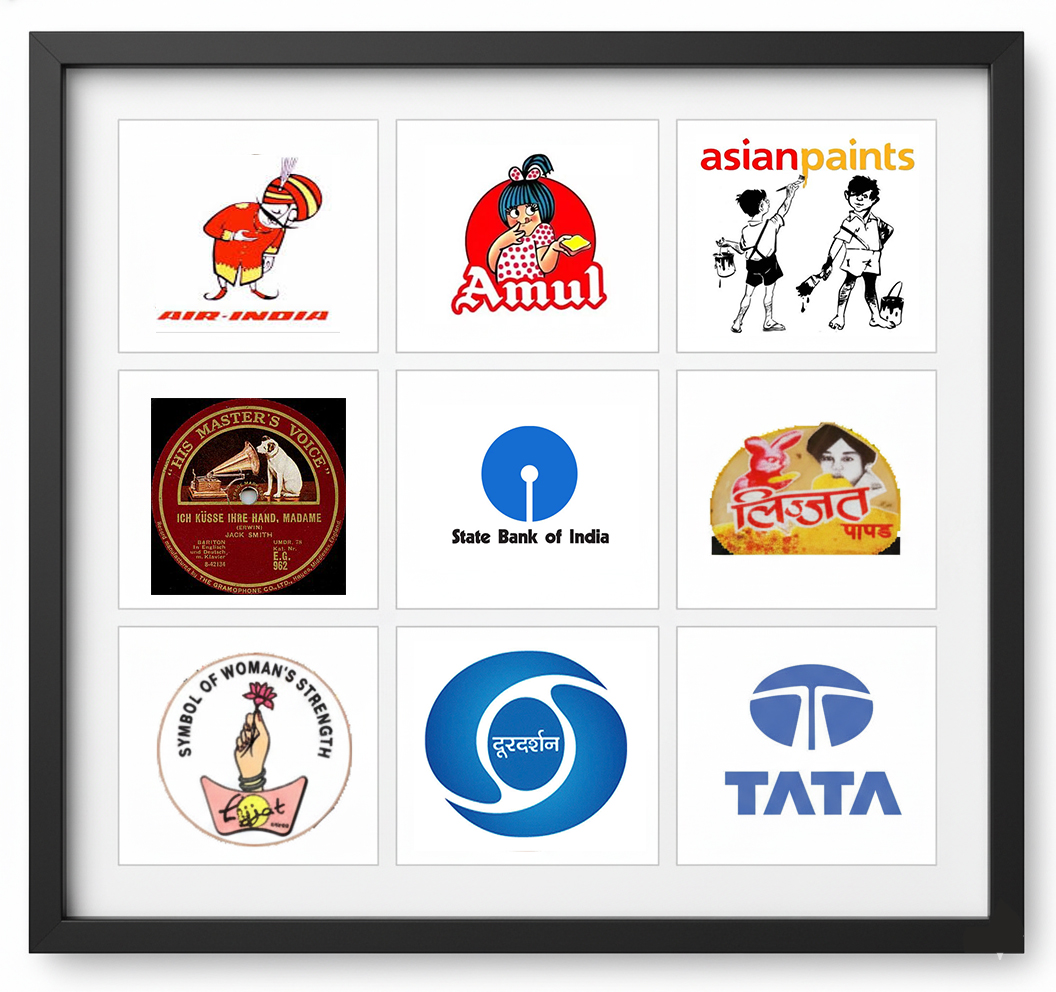
The logo of Indian brands is not just a design. Sometimes they have become a symbol of the country's culture, people's feelings, technology or creativity. Some logos are familiar to the world today, and some are hidden in the heartwarming story behind them. All of these stories can be found here.
Doordarshan logo: A symbol of the country in the eye
The logo of Doordarshan is a landmark creation in the history of Indian design. It was created in 1976 by Debashis Chakraborty, a student of the National Institute of Design. The logo looks like an abstract shape of two eyes, with a lump or round center in the middle. That round part refers to the television and the two curved lines on the outside express the human eye or vision. The intention was to give a signal - the country is looking at itself through a new media. Interestingly, it took him just a few hours to create the logo. But these simple curved lines were so unique that even today when Doordarshan speaks, the blue logo first comes to mind.
HMV and His Master's Voice: A Dog and a Gramophone
One of India's oldest record companies, the Gramophone Company, later known as HMV, has one of the world's most famous visual logos. A dog, named Nipper, listens to his owner's voice on a recording played on a gramophone. This scene gives birth to the logo. The story is more human. Nipper lives with his owner's brother after his owner dies. One day when the old record was played on the gramophone, the dog looked at the machine in surprise, as if he recognized the owner's voice. Jake Henry Barrow painted a picture of the scene, which he called "His Master's Voice." This image later became HMV's logo. This dog-gramophone duo still holds a place of nostalgia in the history of Indian music.
'Gattu 'by Asian Paints: The story of the naughty boy painted by the mastermistress
Gattu is an immortal character in the history of Indian advertising. In 1954, the Mungeshkar family sought Ray's help in rebranding Asian Paints. He creates not only the logo, but also the mascot of the brand. He was born there. Bare-faced, unkempt hair, handkerchiefs and pots and pans are a reflection of the life of middle-class Indian boys at that time. There is a story that Satyajit Ray initially drew the character in a more structured form, but it was not fun. Later, when the boy was drawn in a very naughty, lively manner, everyone was satisfied. Gattu was the face of Asian Paints for four long decades. Gattu's role in making the brand more human and homely to the Indian consumers is immense.
Peacock Logo of MBBL: Industry Rich Identity of Old Indian Bank
The successor of the Madras Bank established during the British period, MBBL, which later became a part of Indian Bank, its peacock-logo caught the eye for its subtle Indian features. The design of the logo retained the traditions of Indian art. The peacock is a symbol of good fortune, royalty and protection in Indian culture. The goal of the logo was to present a familiar and trustworthy symbol to consumers. Although this logo is not much used today, its back story is a valuable chapter of Indian brand-identity.
State Bank of India's Blue Circle: The Place of People in the Keys
The logo of State Bank of India is one of the most well-known corporate symbols of India. It was developed by another group of NID designers in 1970. A circle of blue on the outside and a slightly cut part at the bottom - a white center in the middle. Many people think that this is the key hole, which refers to the security system of the bank. In another interpretation, the middle white part indicates the common people and the blue circle is the whole banking system where the people are the main in the center. With such a simple and effective design, it has remained unchanged for five decades.
The Maharaja of Air India: A Symbol of Courtesy and Royal Hospitality
The Maharaja of Air India is a unique character. It was created by artist Bobby Cook in 1946. The long moustache, the turban, the beaten body, the red coat - in a word a friendly symbol of Indian hospitality. There is an interesting story that the king was never thought of as a king. Rather, it was a simple reflection of India's traditional welcome. In the beginning, the Maharaja was just a promotional poster, later became the familiar face of the company.
Tata Group's' T 'Logo: The Path to a Modern Indian Corporate Identity
The current logo of the Tata Group was created by Olof Olins in 1998. The letter T looks like a raised structure, which expresses stability, trust and development. The goal while creating the logo was to create a symbol that would be equally acceptable in India as well as in the international market. The wavy lines of its design symbolize innovation and progress.
Amul's Daughter: Great Branding in Commonality
Amul's "Amul Girl" is India's longest-running advertising heroine. The character was created in 1967 by an advertising agency named Da Kumar Brothers. Interestingly, the Amul Girl was created as a counter to the advertisement of the British brand Polson. The banner of Amul Girl used to be based on political, social or sports events of that time. Her sweet, funny comments make the brand closer to the general public.
Lijjat Papad's Rabbit: Simple but memorable
The logo of Lijjat Pappad is not very complicated - a small rabbit. But her story is unique. The founders wanted a symbol that would highlight homemade products as family-friendly and pure. The logo quickly became popular as a symbol of the purity and cleanliness of the rabbit.
A logo isn't just a logo, it's also a legal document.
Brand identity is not limited to design. No matter how beautiful or unique a logo is, there is always a risk if it is not given legal protection. Numerous businesses in the country use similar designs, and confusing similarities can hurt the brand. So the most important thing after creating a logo is to register by trademark in kolkata. The logo is legally protected when registered, no one else can copy it, and the credibility of the business increases. A trademark application can be made from any city in the country, including Kolkata, and it makes the future brand identity stronger if the right process is followed.
India's corporate logos are not just about graphic design. They capture the country's culture, creativity, people's emotions and the evolution of the brand over time. Doordarshan's eyes, HMV's dog, Gattu's mischief or Amul's daughter's sweet smile - each symbol is a chapter in India's branding history. Over time, many logos have changed, many stories have been suppressed. But they still remain in our memories.